Loading...
design

design

The Natura 2000 Network

Published in The Project

natura 2000

The NATURA 2000 network is regarded as the cornerstone of EU nature and biodiversity policy. The EU biodiversity strategy sets two main targets for 2020: namely to halt and reverse the biodiversity loss within the territories of EU member states. The principal statutory tools supporting these targets are the Council Directives 92/43/EEC and 2009/147/EC. A keystone outcome of the Council Directives 92/43/EEC and 2009/147/EC, commonly called the “Habitats” and “Birds” directives has been the designation and management of the NATURA 2000 sites network aiming to the development of best practices for the maintenance and restoration of their biodiversity.

It is only in the late nineties that EC‘s Habitats Directive 92/43 -transposed into Greek law as late as 1998- provided a strong base for the species‘environmental protection. Since Article 3 of Law 1335/1983 (Governmental Gazette 32/Α΄/14-03-1983) was published, Greece is obliged to take the necessary measures to implement the national policy of conservation of wild flora and fauna and their natural habitats, with particular attention to species that are threatened with extinction or at risk. This applies especially to endemic species and endangered habitats in accordance with the provisions of the Bern Convention.

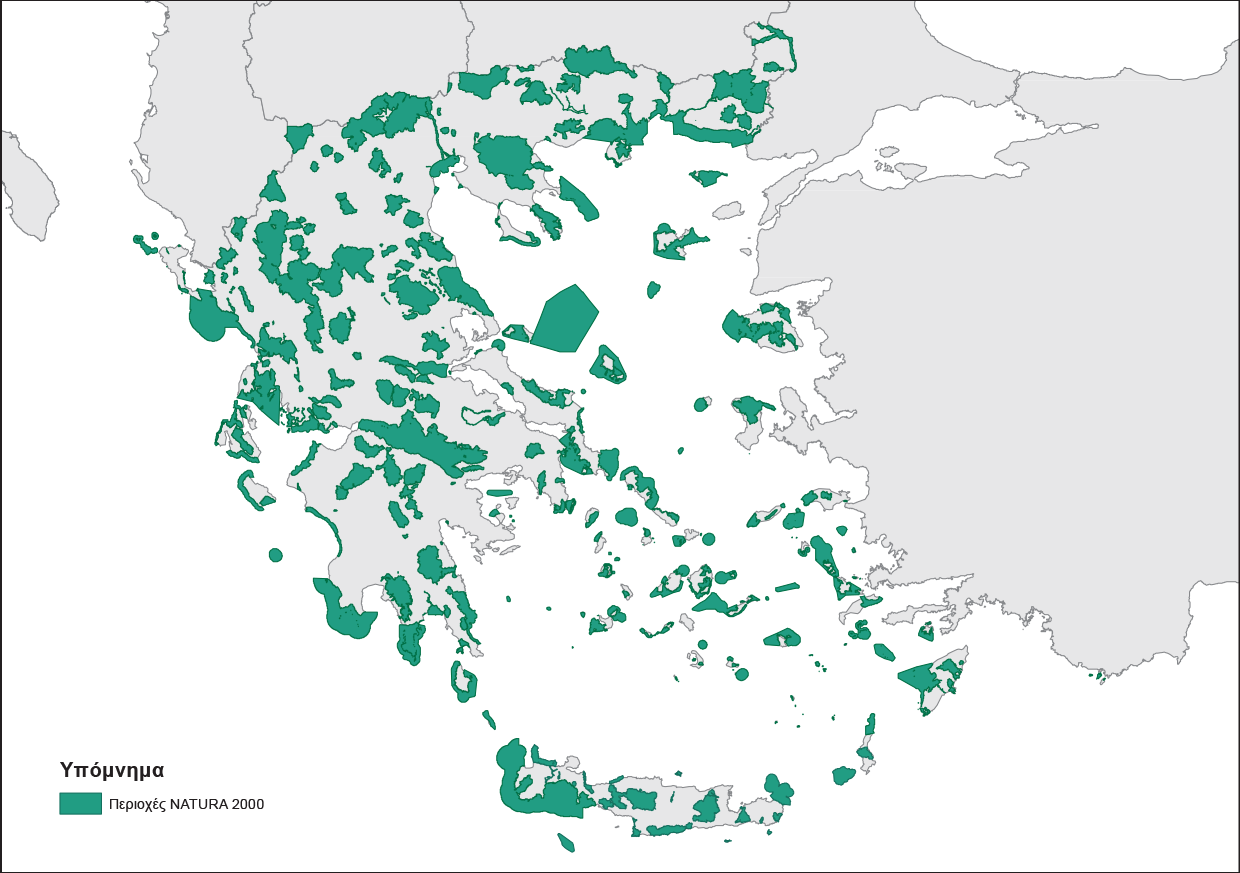
The Project is implemented in 22 Natura 2000 sites in Greece and Cyprus.

map1 Natura2000

Map: Natura 2000 sites in Greece (HOS)

More info for the Natura 2000 Network: https://ec.europa.eu/environment/nature/natura2000/index_en.htm & https://geodata.gov.gr/en/dataset/to-diktuo-natura-2000-kai-prostateuomenes-periokhes (in Greece)

More

Demonstration of the two new Antipoison Dog Units of the LIFE Bonelli EastMed Project

Published in News

Two new Antipoison Dog Units, were presented in public on Thursday, 12th of December 2019. These units have been established in the framework of the LIFE Bonelli EastMed Project and will act in Crete and Rhodes under the supervision of the University of Crete-Natural History Museum of Crete (UoC-NHMC) and the 1st Hunting Federation of Crete & Dodecanese.

One main aim of the Antipoison Dog Units, is to inform the local communities on the implementation of this important action on the island of Crete. This will help the prevention of poisoning incidents in the Bonelli’s eagles’ areas and will assist relevant authorities in dealing with the serious problem of illegal use of poison baits.

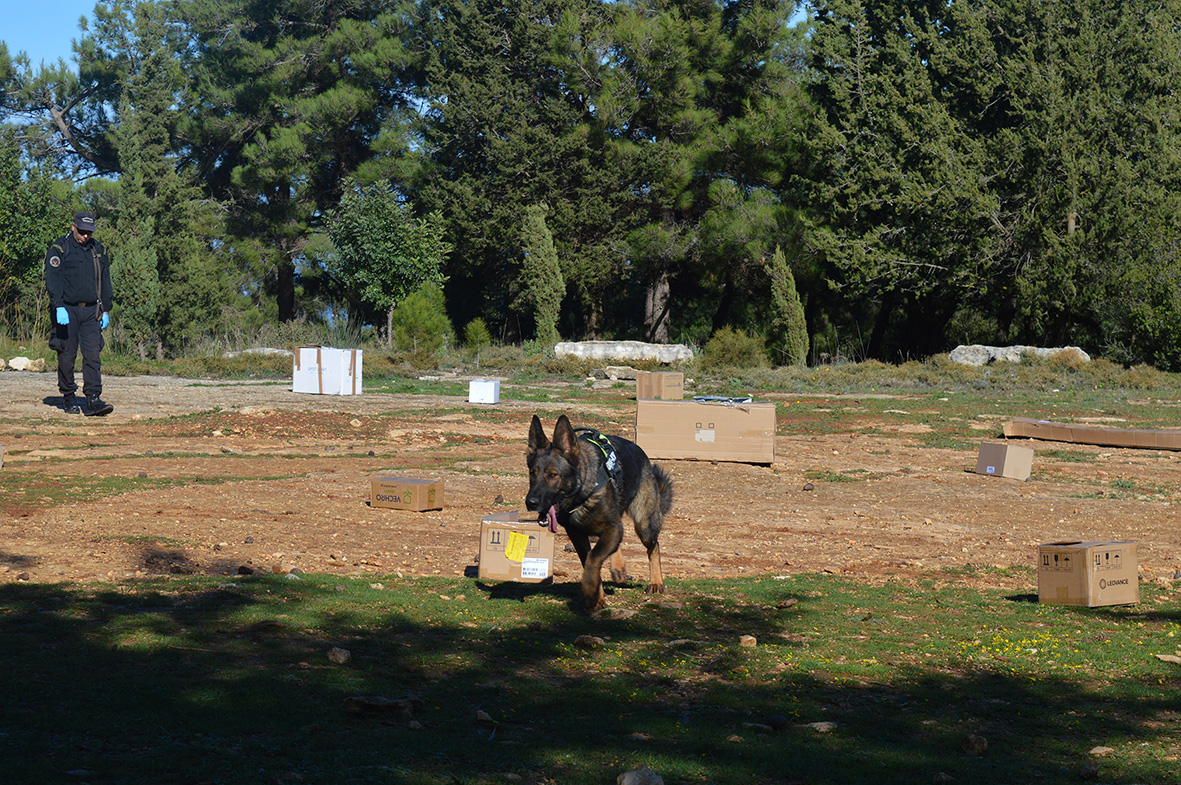
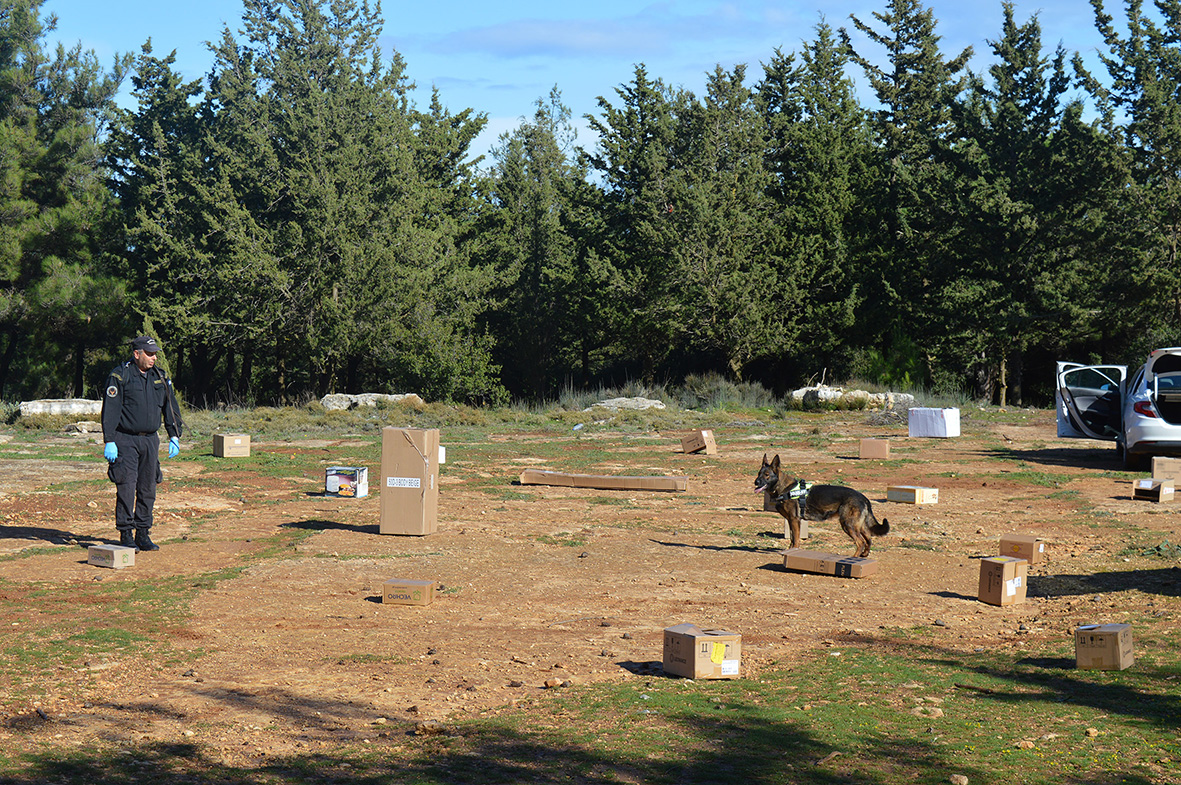
During the demonstration, the two new sniffer dogs "Chica" and "Paca", along with their handlers Mrs. Christina Diakidi and Mr. George Chorafas respectively and their trainer Mr. Jesus Lopez, presented the operation of the Antipoison Dog Unit in the field.

Antipoison Dog Units Crete NHMC 1  Antipoison Dog Units Crete NHMC 2

More

Eagles fly free… but die on the power lines

Published in News

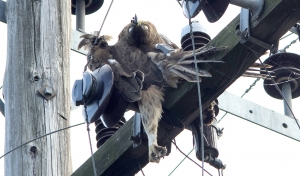
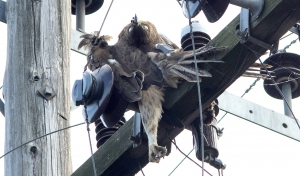
The life of a young Bonelli’s Eagle came to a tragic end; another victim of electrocution in the Thessalian plain, Central Greece. Born in the Aegean Island of Andros, the endangered eagle, tagged with a transmitter under a European LIFE Project, was trying to get a rest on a power transmission tower.

The unlucky Eagle was born in spring 2019 and, during the few months of his life, he embarked on a long journey, searching for suitable foraging and shelter sites. He reached the Albanian shore, where he stayed for a month, and then he headed back south, soaring spectacularly over downtown Athens, before he settled in the plains of Central Greece, where he finally lost his life. The dead bird was transported to ANIMA Wildlife & Rehabilitation Centre for an autopsy and then to the University of Crete for toxicological screening.
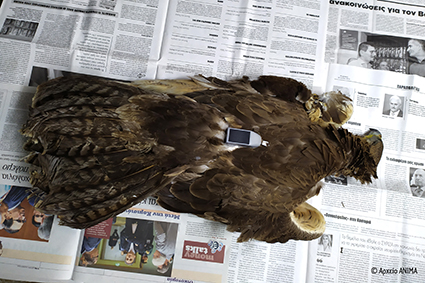
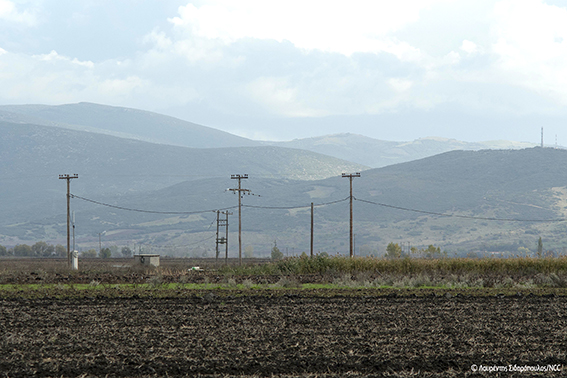
Spizaetos se ANIMA eksetasi    Spizaetos Electrocution ThessalikosKampos 112019 LSidiropoulos NCC 1

Electrocution poses a major threat to Bonelli’s Eagle. Numerous studies, as well as the results of many relevant research projects in the Mediterranean, confirm that, in many regions, electrocution is the main threat, especially for immature birds, when they, after the breeding season, fly away from the nest and often visit areas with intense human presence.

The issue also seems crucial in Greece. Two immature Bonelli’s Eagles have already been found dead from electrocution (one in Tilos Island and one in the Thessalian plain) since the start of the LIFE Bonelli EastMed Project (2018). The death rate is obviously larger, since only a small percentage of the incidents is registered, due to the difficulties in spotting the dead birds’ location. Often, forest fires attributed to “unknown reasons” start near power lines from electrocuted birds.

Unfortunately, very little has been done by the relevant bodies in Greece on the subject of power line insulation. Especially the Thessalian plain, a large part of which is covered by Special Protection Areas (SPAs) for wild birds (Natura 2000 network), is an extremely dangerous electrocution trap for raptors: the large rural areas provide abundant prey for raptors, gathering there every winter in large numbers. However, due to the absence of large trees or high-standing rocks, the only positions available for them to perch are man-made structures, such as power transmission towers and pylons, making them extremely susceptible to electrocution.

Many other raptor species fall victim of electrocution every year, among them rare and endangered species as the Egyptian Vulture, the Greater Spotted Eagle, the Short-toed Snake Eagle, the Eagle-Owl, and the Osprey. Other large birds, as storks, crows and gulls, are frequently electrocuted.

Tagging young Bonelli’s Eagles with GPS transmitters under the LIFE Bonelli EastMed Project is expected to provide more information on the potential hazardous sites for the species –and, unhappily, will probably reveal more electrocution incidents.

In collaboration with HEDNO (Hellenic Electricity Distribution Network Operator), actions are to be undertaken for the electrocution risk reduction, as the insulation of transmission towers and the marking of the power lines. These actions are considered of crucial importance for this endangered species conservation and are one of the Program’s main objects. They are also expected to contribute significantly to the protection of many other species from electrocution.
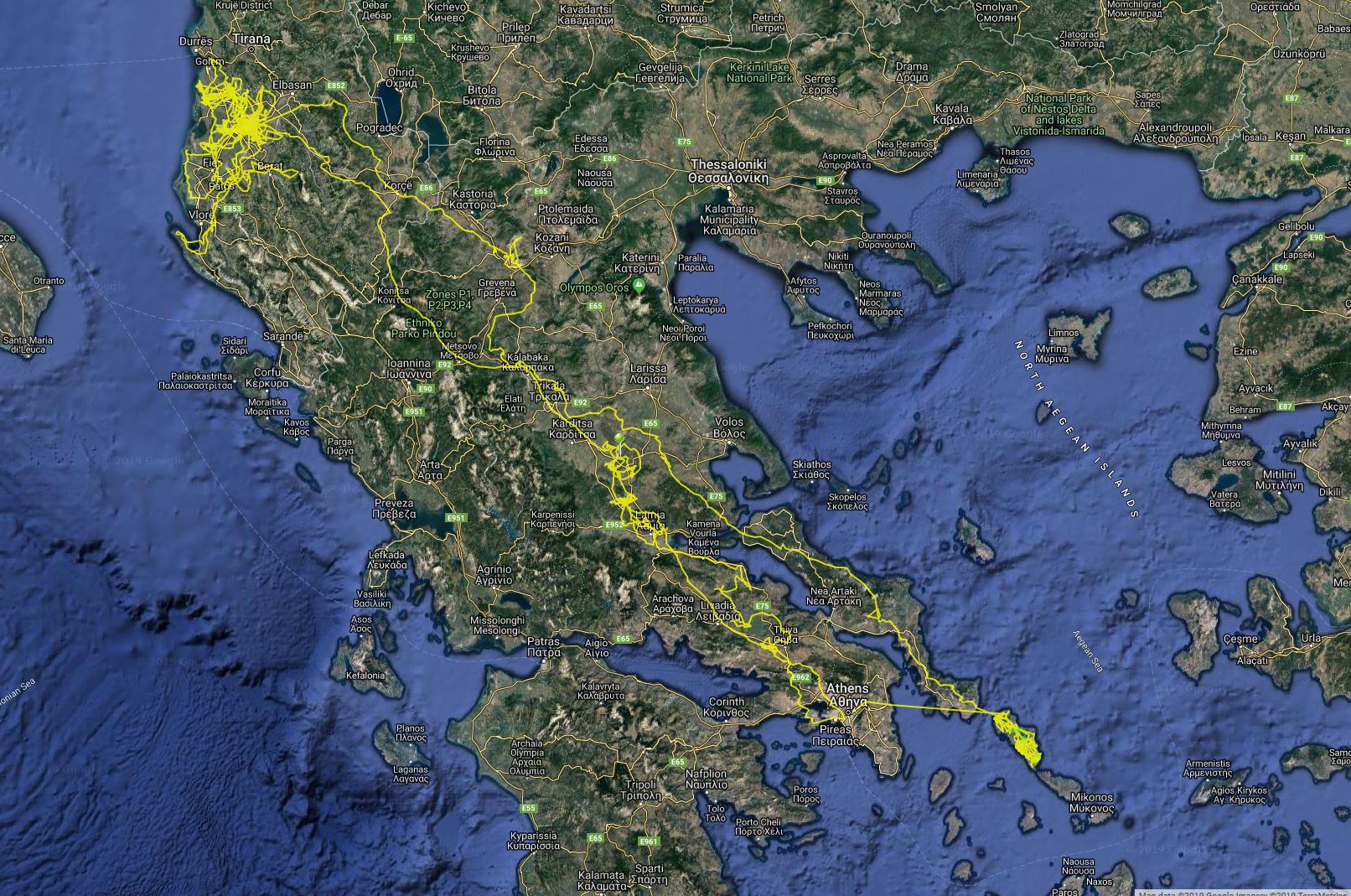
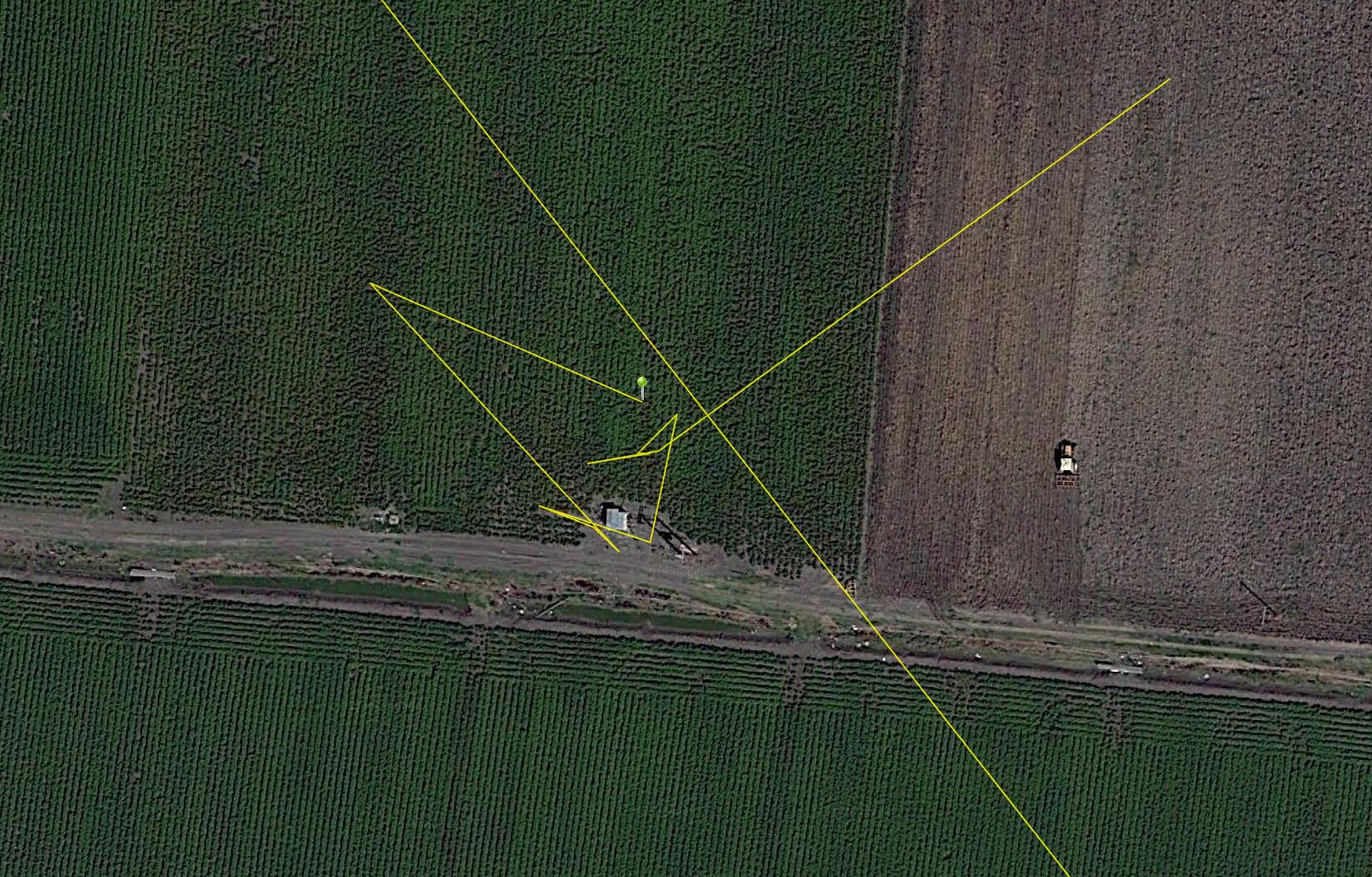
χάρτης μετακινήσεων    zoom in electrocution

More

Training seminar in Chania

Published in News

One of the main goals for the LIFE Bonelli EstastMed Project is to improve the conservation status of the Bonelli’s eagle in the Eastern Mediterranean. In this context, training seminars were organized for the Project Partners as well as for a specialized audience.

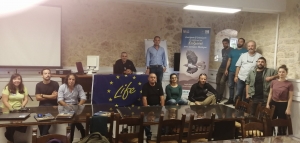
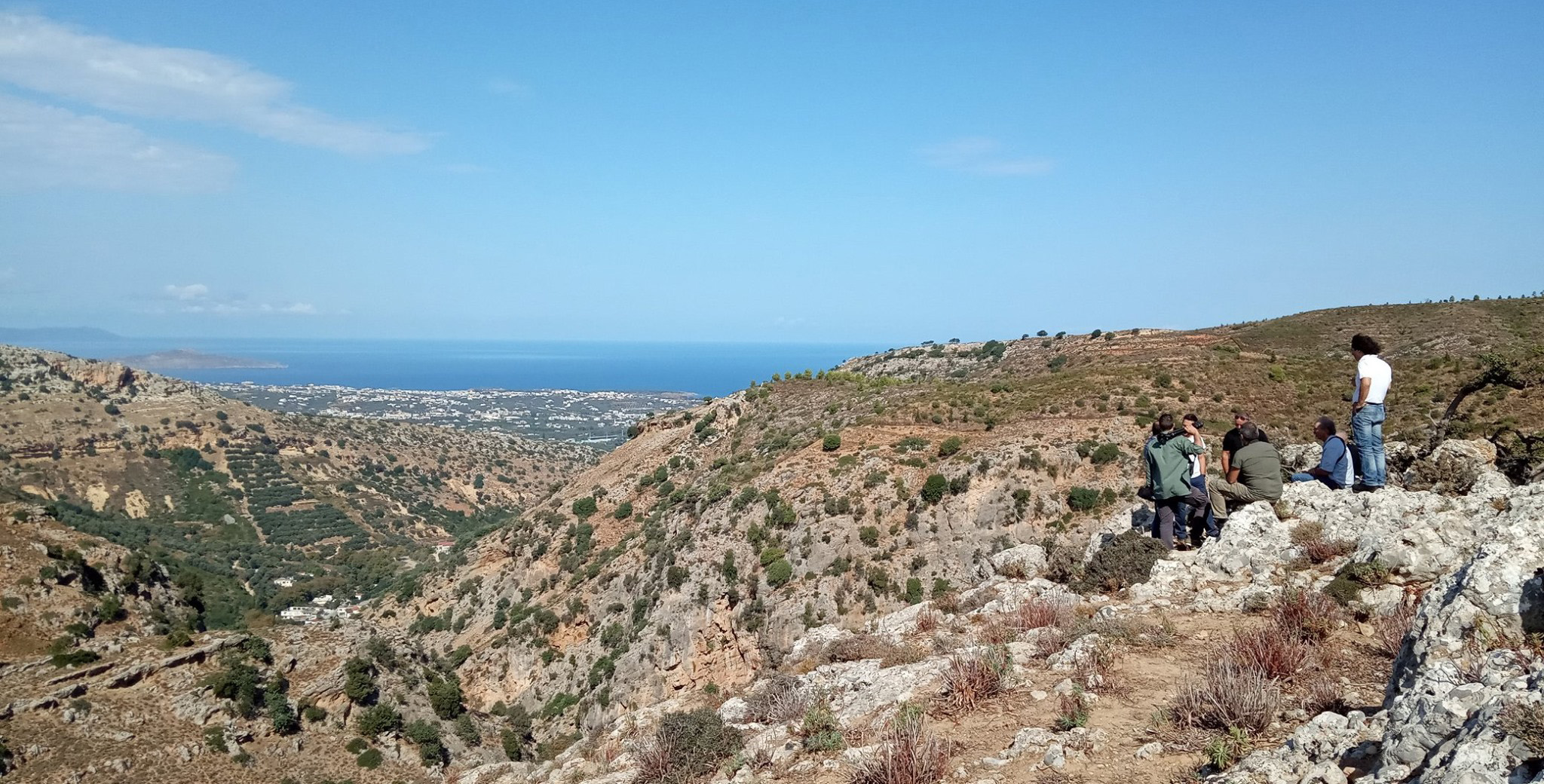
The second training seminar of the Project was successfully held in Chania on 29th and 30th October 2019. During the seminar methods of recording and assessing potential threats for the species were presented faces, as well as various management practices aiming to increase prey availability for the species within the project areas in Greece and Cyprus. On the 31st of October 2019, the Project team visited the wider area of Chania in order to observe Bonelli’s Eagles within their territories.

2019 10 Seminar LIFEBonelliEastMed Crete site

More

The first Bonelli's Eagle hatchling of the year found in Tilos

Published in News

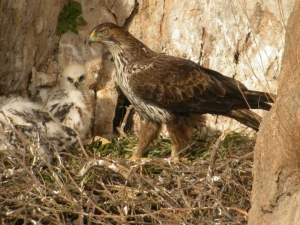
A good omen marked the launch of Bonelli’s Eagle conservation efforts in Greece. The Aegean field team’s researchers observed the first Bonelli’s Eagle hatchling in Tilos Island, Dodecanese, one of the most prominent area for the species in Eastern Mediterranean. This observation is particularly significant for the completion of the telemetry actions, under the LIFE Bonelli EastMed Project, which started its implementation a few months ago in Greece and Cyprus.

Bonelli’s Eagle, a species widely distributed in Eurasia and North Africa, is the typical Mediterranean eagle species for Greece, since it is mostly found in the Aegean Sea islands, the coastal mountain ranges of West and Southern Greece, and Crete. It nests in vertical rocky cliffs (sometimes directly over the sea) in Greece and mainly on large trees in Cyprus. A formidable hunter, it feeds on small- and middle-sized mammals and birds.

Bonelli’s Eagles start their spectacular aerial demonstrations and the subsequent mating from January each year and they lay their eggs on early February. Immature Bonelli’s Eagles hatch from mid-March and start their flight from mid-May. They remain for a while in their native territory, dependent on their parents, and then they set off a period of nomadic dispersion, travelling over sea and islands, even reaching different countries, until they find their own territory, where they usually remain for life.

Main threats to Bonelli’s Eagle include electrocution on power transmission towers and collision with power lines, drowning in open tanks without an escape route, and disturbance in nesting areas. As any big raptor, Bonelli’s Eagle needs an extended territory, and therefore its conservation requires a large-scale spatial planning and an absence of disturbance during the breeding season. For example, the excessive number of wind power stations installed in two Special Protection Areas (SPAs) for the species, Cape Kafireas, Euboea Island, and Mani Peninsula, Peloponnese, is expected to affect the local population’s sustainability. Other negative impacts expected are habitat loss, disturbance due to construction works taking place during the species’ breeding season (against the rules set by the EU’s Birds Directive), and an increased mortality due to collisions with wind turbines and energy transmission infrastructure, if they proper mitigation measures have not been applied.

LIFE Bonelli eastMed Project aims to census and monitor the species in selected Special Protection Areas in South Aegean, Attica, Peloponnese and Crete regions in Greece, as well as in Cyprus. Its objects also include, for the first time in such a large scale,  through intensive use of telemetry, monitoring of the juveniles’ dispersal movements in order to examine the Eastern Mediterranean population connectivity, mapping of their temporary settlement areas, and assessment of the threats they face using sensitivity mapping.

In order for this iconic, yet highly sensitive species to successfully coexist with man, this information is essential –especially in the insular region of the Aegean, where habitats are characterized by their small spatial scale and which are already under great pressure from extensive human activity.

More

The Bonelli's Eagle

Published in The Bonelli's Eagle

Perhaps the most dynamic of all eagles, Bonelli's Eagle is a typical species of the open lands in the Mediterranean region, where it feeds mainly on medium-sized mammals and birds.Ιn Cyprus it is called “Perticosiachino” (the raptor that hunts partridges), in Crete and other islands “Philadelphus” (because it is often found in pairs).

A resident species in the Mediterranean, it used to be more common in the past in Greece, nowadays mainly found in the Aegean islands, Crete and SE Peloponnese. It is an endangered species in Europe (Nearly Threatened) and in Greece is classified as Vulnerable. Greece hosts 100-140 pairs of Bonelli’s Eagle and Cyprus 40-50.

More

Identification

Published in The Bonelli's Eagle

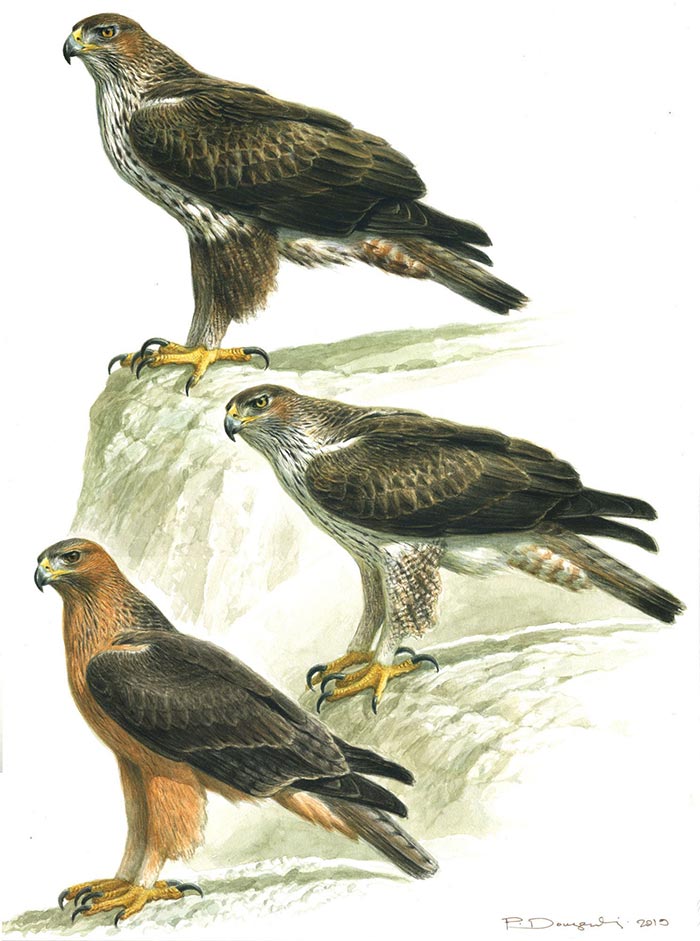
bonelli plate dougalis low resΟ Σπιζαετός είναι ένα μεσαίου έως μεγάλου μεγέθους αρπακτικό, με μήκος σώματος 55-67cm και άνοιγμα φτερών 143-176 cm. Το θηλυκό είναι αισθητά μεγαλύτερο (σε παρατήρηση του ζεύγους μαζί, ιδίως σε πτήση) με το βάρος του να κυμαίνεται από 2100-3025gr ενώ του αρσενικού 1400-2240gr. Το ενήλικο έχει καφέ άνω μέρος με ένα λευκό μπάλωμα (τριγωνικού σχήματος) στην πλάτη, και λευκό κάτω μέρος με λεπτές, μαύρες κηλίδες που μειώνονται με την ηλικία. Το λευκό εκτείνεται στο μπροστά κάτω μέρος των φτερούγων και χωρίζεται από το γενικά σκούρο πίσω μέρος από μια σχεδόν μαύρη γραμμή. Μια έντονη σκούρα τελική γραμμή σχηματίζεται και από τις απολήξεις των πηδαλιούχων στα ενήλικα πουλιά. Γενικώς τα ενήλικα πουλιά δεν είναι εύκολο να μπερδευτούν με άλλα είδη με καλές συνθήκες παρατήρησης.
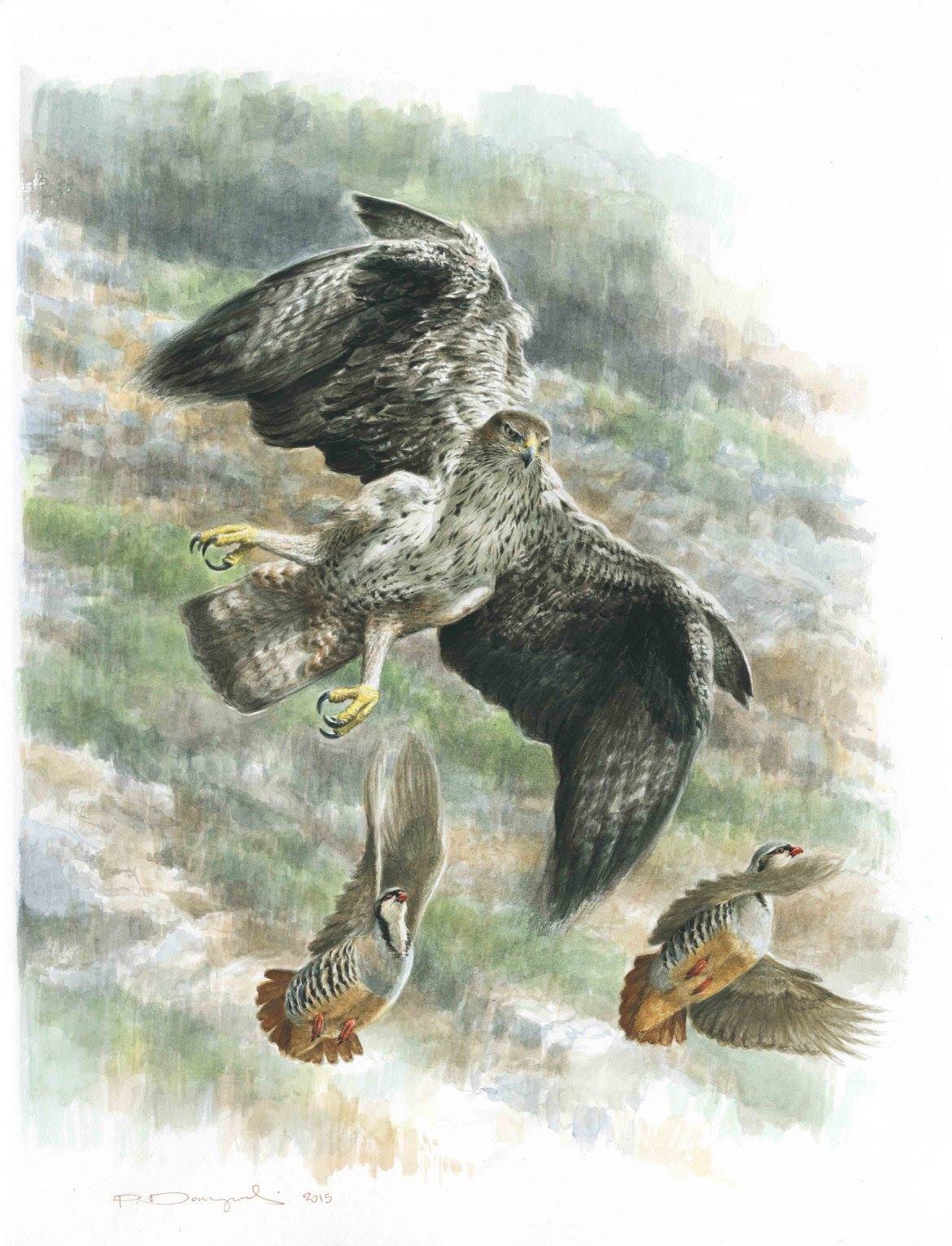
Τα νεαρά πρώτου ημερολογιακού έτους είναι σκούρα καφέ στο πάνω μέρος, και ανοιχτά κοκκινωπά – καφέ στο κάτω. Τα πτητικά φτερά είναι γκρι με ελαφριές, ομοιόμορφες ραβδώσεις και οι άκρες γενικά σκουρότερες από τις έσω φτερούγες από κάτω (από πάνω συμβαίνει το αντίθετο με τις ανοιχτόχρωμες ραβδώσεις των έξω ερετικών να ξεχωρίζουν από το σκούρο ομοιόχρωμο άνω μέρος των πουλιών). Τα μεγάλα καλυπτήρια είναι πιο σκούρα από την υπόλοιπη φτερούγα και σχηματίζουν μια ποικίλη σκούρα ταινία στο εσωτερικό της φτερούγας. Το πάνω μέρος είναι ομοιόμορφο σκούρο γκρι-καφέ με ένα λευκό στίγμα στην πλάτη (μικρότερο και πιο σαφώς ορισμένο από των ενηλίκων) σε ορισμένα άτομα. Σε καθισμένα πουλιά, εντύπωση προκαλεί το κοντράστ των πιο ανοιχτόχρωμων, μακριών ποδιών σε σχέση με το πιο βαθύ καφέ-κόκκινο στήθος.

Στα ενδιάμεσα πτερώματα (άνοιξη 2ου – 3ου ημ. έτους) εμφανίζονται χαρακτηριστικά και από τις άλλες δύο κλάσεις. Το πάνω μέρος ομοιάζει αρκετά τα ενήλικα αλλά διατηρεί γνωρίσματα των νεαρών όπως τα πιο ανοιχτόχρωμα μεγάλα καλυπτήρια και διατηρημένα φτερά των νεαρών. Η ουρά και η πλάτη σε γενικές γραμμές ομοιάζει των ενηλίκων. Από κάτω είναι πιο εύκολος ο προσδιορισμός καθώς η σκούρα ταινία είναι πολύ έντονη ενώ στα πτητικά φτερά σχηματίζεται στις απολήξεις μια έντονη σκούρα γραμμή που απουσιάζει από τα νεαρά πρώτου έτους και διακόπτεται μόνο από  φτερά που έχουν διατηρηθεί από το πρώτο πτέρωμα. Άτομα σε κούρνια είναι πιο δύσκολο να διαχωριστούν από τα ενήλικα, το στήθος και το κεφάλι είναι σε γενικές γραμμές πιο σκούρα, χωρίς να είναι εντελώς κατάλευκα.

More

Ecology

Published in The Bonelli's Eagle

Bonelli PaschalisDougalisΟ Σπιζαετός  είναι κυρίως επιδημητικό είδος με μερική μετανάστευση κυρίως των νεαρών ατόμων να έχει παρατηρηθεί στη Μ. Ανατολή και τη Δ. Μεσόγειο. Έχει έντονη, εφ’ όρου ζωής φιλοπατρία (τα χωροκρατικά άτομα περνούν όλη τη ζωή τους σε μια επικράτεια όταν εγκατασταθούν) μετά από ένα μεταβατικό, νομαδικού τύπου, στάδιο κατά τη μετα-αναπαραγωγική διασπορά των νεαρών. Κατά τη φάση διασποράς, τα ανώριμα άτομα μπορεί να χρησιμοποιούν περιοχές προσωρινής εγκατάστασης, εκτός κατειλημμένων επικρατειών και σε χώρους που υποστηρίζουν ικανούς αριθμούς λείας.

Οι Σπιζαετοί διατηρούν έναν αριθμό εναλλακτικών φωλιών ανά επικράτεια (2-5 στην Ελλάδα), οι οποίες στην Ελλάδα παρατηρούνται αποκλειστικά σε βράχια, ενώ στην Κύπρο κυρίως σε δέντρα. Η χρήση τους εναλλάσσεται κατ’ έτος, πιθανότατα για να αποφύγουν πιθανή έκθεση σε συσσωρευμένη αύξηση εκτοπαράσιτων. Οι φωλιές μπορεί να είναι πολύ μεγάλες κατασκευές με ύψος και διάμετρο >1,5 μ., καθώς κάθε χρόνο αποτίθεται επιπλέον υλικό σε αυτές. Στο Αιγαίο και την Κύπρο κανένα άλλο είδος δεν μπορεί να φτιάξει τέτοιες φωλιές, ενώ στην ηπειρωτική Ελλάδα και την Κρήτη, παρόμοιες φωλιές (και πιθανώς και με εναλλαγή χρήσης) δεν αποκλείεται να ανήκουν και σε Χρυσαετούς.

Το μέγεθος των επικρατειών του είδους στην Ισπανία κυμαίνεται από 20,7 – 86,5 km2 και επηρεάζεται από το ποσοστό κάλυψης των μεσογειακών θαμνώνων που κυριαρχούν στις περιοχές τροφοληψίας  που επιλέγει το είδος. Η αλληλοεπικάλυψη των επικρατειών είναι γενικά μικρή (15%) και κυρίως σε περιοχές με μεγάλη πυκνότητα αετών. Σε ορισμένες επικράτειες στην Ελλάδα οι Σπιζαετοί απομακρύνονται έως και πάνω από 8km από τις φωλιές προς αναζήτηση τροφής, ενώ η απόσταση πλησιέστερης γειτνίασης μεταξύ ζευγών βρέθηκε να είναι 5-6 km σε περιοχές με υψηλή πυκνότητα, στην Πελοπόννησο και >15χλμ. στην Κρήτη.

Προτιμά απομονωμένες περιοχές με έντονο ανάγλυφο σε γενικά ξηρά κλίματα, που προσφέρουν ασφαλείς θέσεις φωλιάσματος και ανοιχτές εκτάσεις για κυνήγι.

Τρέφεται κυρίως με θηλαστικά και πουλιά μέχρι το μέγεθος λαγόμορφων και γλάρων, ενώ μπορεί να συμπληρώσει τη δίαιτά του και με μεγάλες σαύρες και φίδια. Σπάνια τρέφεται με πτώματα. Η διαθεσιμότητα της κύριας λείας του (κουνέλια, πέρδικες και περιστέρια στη Δ. Μεσόγειο) είναι καθοριστικός παράγοντας των ρυθμών επιβίωσης και παραγωγικότητας. Αρχικές έρευνες στην Ελλάδα έδειξαν ότι το είδος τρέφεται με κουνέλια, κουρούνες, γλάρους και νησιωτικές πέρδικες, ενώ στην Κύπρο αρουραίοι και Nησιωτικές Πέρδικες αποτελούν τα σημαντικότερα είδη λείας.

More

Distribution

Published in The Bonelli's Eagle

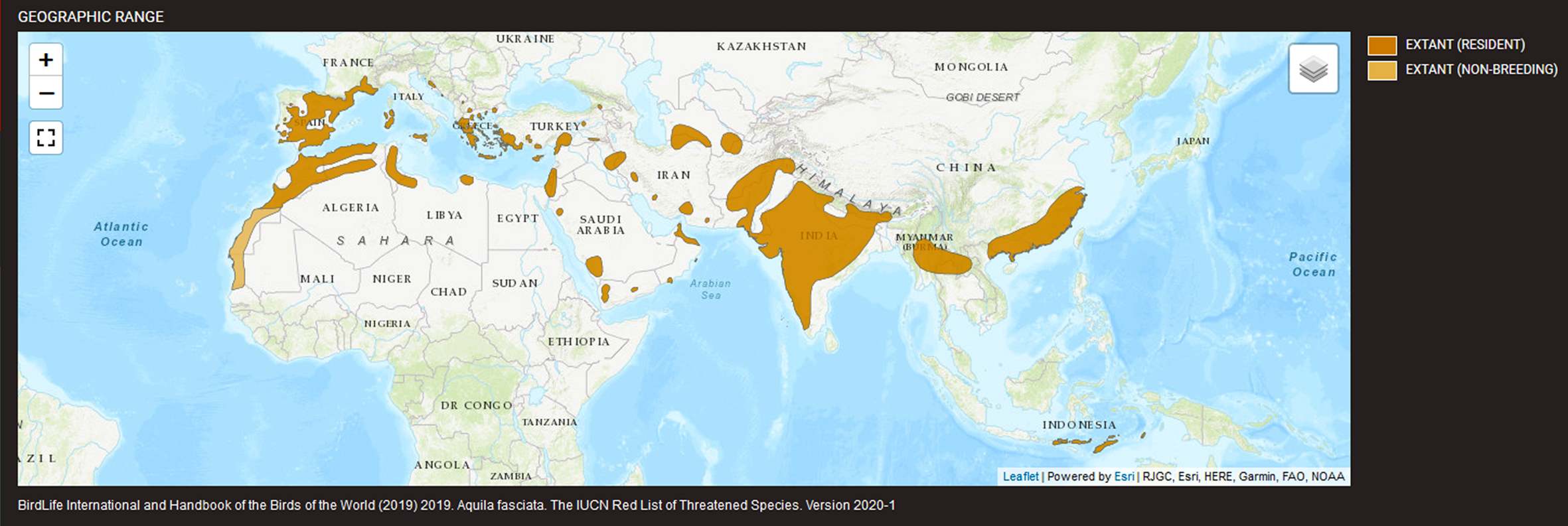
Global distribution Bonellis Eagle IUCN

Ο Σπιζαετός  (είδος Aquila fasciata) είναι ένα μεσαίου έως μεγάλου μεγέθους αρπακτικό με Παλαιαρκτική και Ινδομαλαισιακή κατανομή, που εκτείνεται από την Ιβηρική Χερσόνησο ως τη Μέση Ανατολή, Ινδία, Ινδοκίνα, ενώ ένας απομονωμένος πληθυσμός του είδους έχει βρεθεί και στα νησιά Sundas της Ινδονησίας (υποείδος renchii). To είδος Aquila spilogaster θεωρείτο στο παρελθόν υποείδος του Σπιζαετού με αφροτροπική κατανομή.

Παλαιότερα ήταν πολύ πιο κοινός στην ελληνική ύπαιθρο, σήμερα απαντά κυρίως στα νησιά του Αιγαίου, την Κρήτη και τη ΝΑ Πελοπόννησο.

More

Threats

Published in The Bonelli's Eagle

Ο Σπιζαετός  θεωρείται Σχεδόν Απειλούμενο (NT) είδος στην Ευρώπη,  καθώς ανακάμπτει από, μέτριας έντασης, μειώσεις στον κύριο όγκο του πληθυσμού του στην Ιβηρική Χερσόνησο (BirdLife International, 2004). Στην Ελλάδα το είδος χαρακτηρίζεται ως Τρωτό (VU), με εκτιμώμενους πληθυσμούς 100-140 ζεύγη (σταθερή τάση) και στην Κύπρο με 40-50 ζεύγη (μικρή αύξηση), αντίστοιχα. Οι γειτονικοί πληθυσμοί (σε Βαλκάνια και Εγγύς Ανατολή) είναι είτε πολύ μικροί είτε ελάχιστα μελετημένοι (<20 ζεύγη σε Τουρκία - Ισραήλ, <10 ζεύγη στις υπόλοιπες χώρες).

Το είδος θεωρείται εξαιρετικά ευάλωτο σε φαινόμενα ηλεκτροπληξίας και σύγκρουσης σε δίκτυα μεταφοράς ηλεκτρισμού. Ενδεικτικά, σε εκτεταμένη έρευνα στην Ισπανία που περιλάμβανε 377 περιστατικά, οι ηλεκτροπληξίες και συγκρούσεις σε δίκτυα μεταφοράς ρεύματος ήταν η σημαντικότερη αιτία θνησιμότητας, ενώ δεύτερη στη σειρά ήταν η σκόπιμη θανάτωση. Η σκόπιμη θανάτωση περιλάμβανε πυροβολισμούς, παγίδευση και δηλητηριάσεις και αφορούσε κυρίως ενήλικα άτομα, ενώ οι ηλεκτροπληξίες/συγκρούσεις κυρίως νεαρά. Η έκθεση σε μόλυβδο από την κατανάλωση πυροβολημένων θηραμάτων είχε επίσης αρνητικές επιπτώσεις στην αναπαραγωγή του είδους, λόγω της αντικατάστασης ενηλίκων από νεαρά σε περιοχές με υψηλή θνησιμότητα χωροκρατικών ατόμων.

Κύριες απειλές για το είδος στην Ελλάδα και την Κύπρο, είναι:

  • Η θανάτωσή του (λαθροθηρία) από τον άνθρωπο, ιδίως στα νησιά του Αιγαίου, όπου ο Σπιζαετός θεωρείται πως αποτελεί απειλή για οικόσιτα ζώα και είδη θηραματικού ενδιαφέροντος.
  • Η θανάτωσή του με χρήση δηλητηριασμένων δολωμάτων. Στην Κύπρο έχουν καταγραφεί περιστατικά δηλητηρίασης ατόμων Σπιζαετού, σε περιοχές με εκτεταμένη κτηνοτροφία.
  • Η ηλεκτροπληξία σε στοιχεία του δικτύου μεταφοράς ρεύματος (πυλώνες και εναέρια καλώδια). Οι συγκρούσεις σε καλώδια, σύρματα και ανεμογεννήτριες αποτελούν επίσης εν δυνάμει αιτίες θανάτου.
  • Η έλλειψη τροφής λόγω των αλλαγών χρήσεων γης (π.χ. εγκατάλειψη καλλιεργειών σε αναβαθμίδες, μείωση δασικών διακένων), της υπερθήρευσης των ειδών λείας, όπως οι λαγοί και οι πέρδικες, καθώς και επιδημιών στους πληθυσμούς αυτών (π.χ. σε λαγούς στα Δωδεκάνησα), αποτελούν πιθανούς παράγοντες μείωσης της αναπαραγωγικής επιτυχίας του είδους στην Ελλάδα.
  • Παράλληλα, η έντονη όχληση τόσο στα ενδιαιτήματα τροφοληψίας όσο και κοντά στις θέσεις αναπαραγωγής από παράγοντες όπως οι δραστηριότητες του πρωτογενούς τομέα, η θήρα, η επέκταση των οικισμών και του οδικού δικτύου, οι δραστηριότητες αναψυχής κ.ά. επηρεάζουν αρνητικά την αναπαραγωγική επιτυχία και ενδέχεται να οδηγούν και σε εγκατάλειψη επικρατειών.
  • Ενδέχεται να υπάρχουν και περιστατικά κλοπής αυγών ή/και νεοσσών σε Ελλάδα και Κύπρο, γεγονός που έχει επιβεβαιωθεί στη Σικελία, όπου η περιφρούρηση των φωλιών είχε θετικά αποτελέσματα στην βελτίωση της αναπαραγωγικής επιτυχίας του είδους.
More
Subscribe to this RSS feed
Beneficiary:
Partners:
With the contribution of:
LF-LOGO_CMYK_ENG logo BirdLife International

The LIFE Bonelli eastMed project “Conservation & Management of the Bonelli's eagle population in east Mediterranean” will address the most critical threats to Bonelli’s eagle populations in Greece and Cyprus. The overall objective is to ensure the long-term favourable conservation status for the species’ interconnected local populations, through the establishment and operation of the East Mediterranean Bonelli’s Eagle Network.

The project is implemented by the Natural Museum of Crete - University of Crete, the Game and Fauna Service (Game Fund) - Cyprus, the Hellenic Ornithological Society/BirdLife Greece, the Ministry of Environment & Energy - Greece, the Department of Forests - Cyprus and the NCC Environmental Studies Ltd with the financial contribution of the LIFE instrument of the EE.

For conservation issues:
+30 2810 393292
For Communication issues:
+30 210 8228704 & +30 210 8227937

This email address is being protected from spambots. You need JavaScript enabled to view it.

University of Crete - Natural History Museum of Crete, Knossos Avenue Premises, 71409 Heraklion, Crete

X

Right Click

No right click